
- 1984San Ysidro. The first officer is on scene within minutes but does not enter. The response becomes contain-and-wait. The killer isn't stopped for over an hour.
- 1999Columbine. SRO on site but does not enter. Officers hold a perimeter and wait on SWAT while most of the victims die. Doctrine changes after this: go in.
- 2016Pulse. Officer on site but does not enter. Officers enter and push the shooter into a restroom — then the event gets reclassified as a hostage standoff. The final assault doesn't come for another three hours.
- 2018Parkland. SRO reaches the building within minutes. He stays outside.
- 2022Uvalde. Officers are in the hallway in under three minutes, some with rifles. They treat an active killer like a barricade. Seventy-seven minutes pass before entry.
Four decades. Five incidents. Same failure, different gear, incestuous "Advanced" training built on a posse mentality.
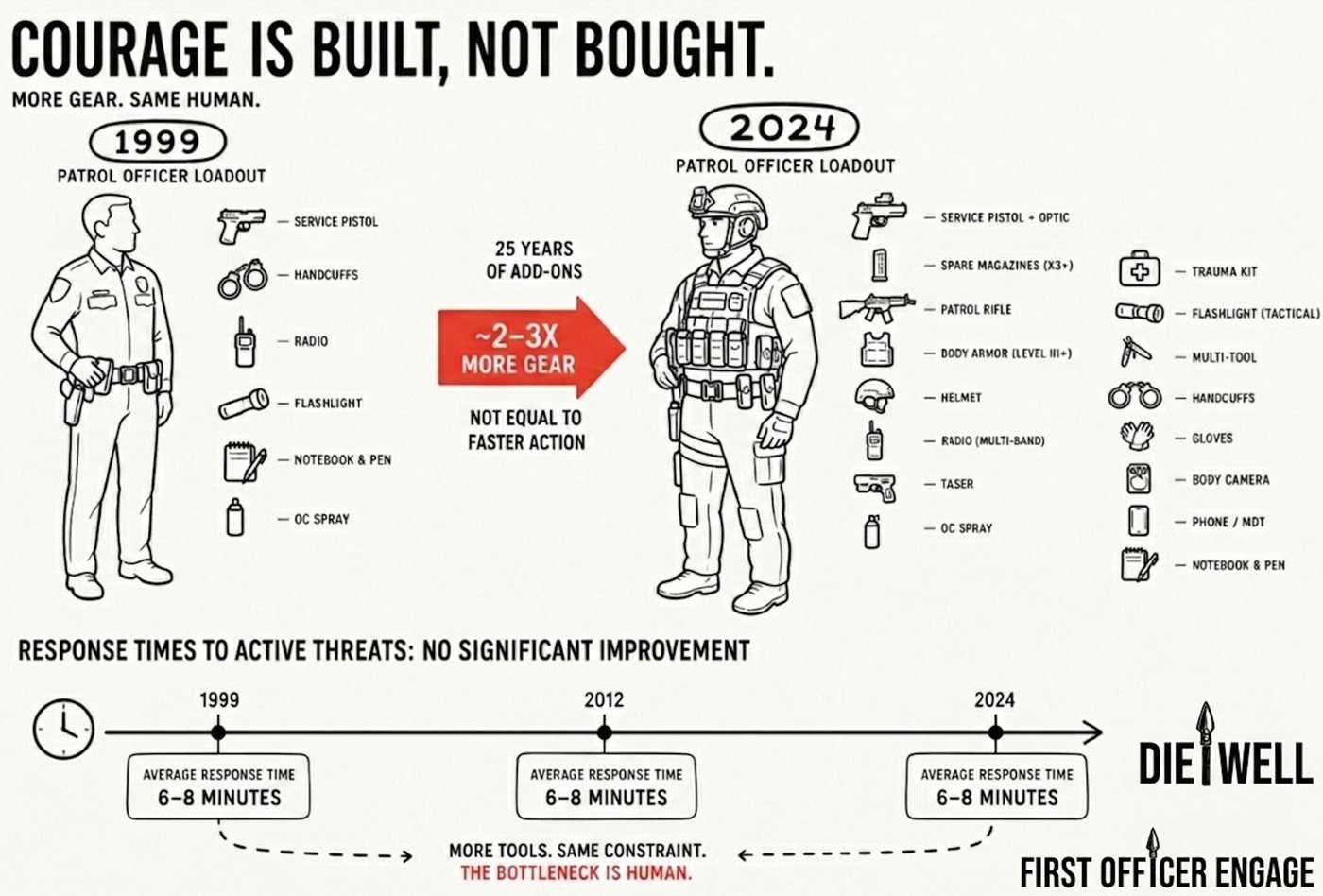
Between 1999 and 2024, a patrol officer's loadout got two to three times heavier — rifles, plate carriers, better optics, more comms. Response times didn't move. Six to eight minutes then. Six to eight minutes now.
We keep treating this like a hardware problem: more armor, more rifles, more hours on room clearing and movement.
It's a software problem. Officers execute tactics with a nervous system, not a spec sheet. Above a certain heart rate, the part of the brain that decides "go through that door" goes offline — and no amount of gear fixes that.
This isn't five isolated tragedies. It's the same predictable failure, on a forty-year loop, because we keep upgrading the equipment and never train the system that has to run it under extreme stress.
That's the gap First Officer Engage is built to close.